What does UV400 mean on sunglasses?
What does UV400 mean on sunglasses?
UV400 on a sunglasses tag means the lenses are designed to block ultraviolet radiation up to 400 nanometres. It's a UV rating, not a glare feature, and a UV400 lens isn't necessarily polarised. In Australia, sunglasses that claim a level of UV protection must meet that claim under the standard, so the swing tag is the first thing to read.
From our range
A wrap for big sun days
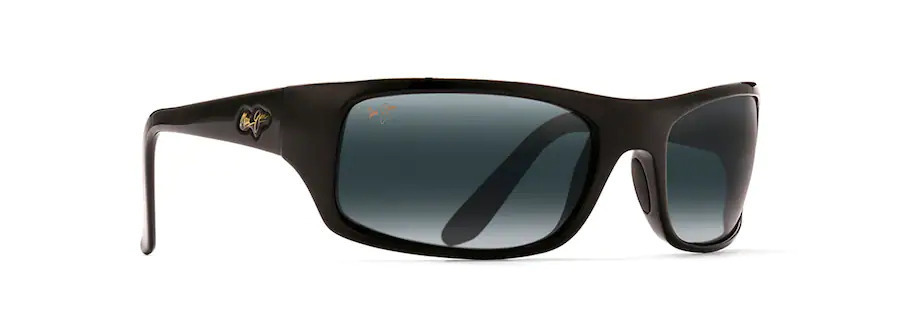
Large, close fitting wraparound sunglasses give you more coverage and cut down direct and reflected UV and glare. The Maui Jim Peahi has neutral grey polarised lenses.
Maui Jim Peahi 202-02 Gloss Black / Neutral Grey Polarised Lenses
For prescription glasses wearers
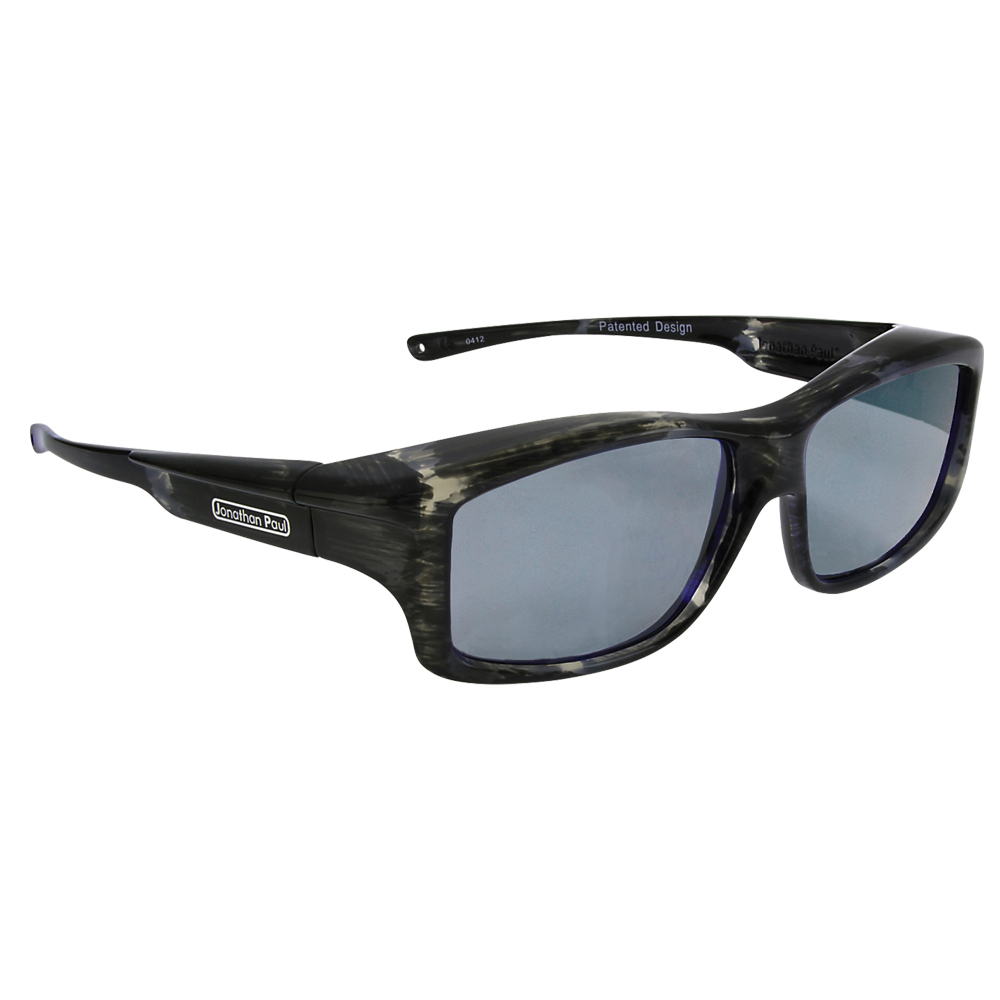
If you wear prescription glasses, fitover sunglasses sit over the top of them. The Fitovers Yamba has grey polarised lenses.
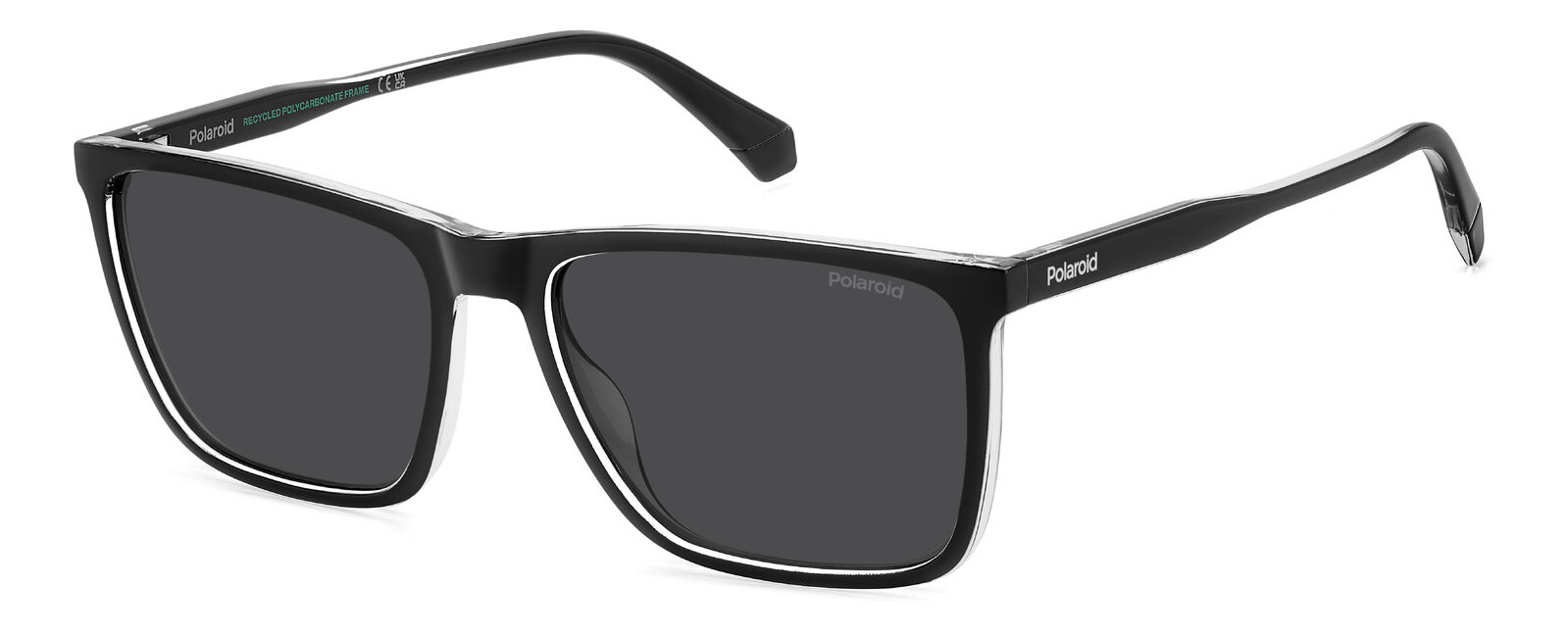
An everyday polarised pair
The Polaroid PLD 4180/S has grey polarised lenses, which filter reflected light to cut glare off water, snow and pavement.
Polaroid PLD 4180/S 7C5 M9 58 Black Crystal / Grey Polarised Lenses
What usually doesn't work
Don't rely on toy sunglasses for sun protection. Eyewear clearly labelled as a toy is excluded from the mandatory sunglasses standard. Pairs marked as fashion spectacles may not give adequate UV protection. Non wraparound sunglasses don't effectively block UV coming in from the side.
What UV400 actually tells you
The 400 refers to wavelength: UV400 means a lens is designed to block UV rays with wavelengths up to 400 nanometres. That matters because long term UV exposure can damage your eyes. That includes cataracts, which UV exposure can contribute to.
Too much UV can also cause photokeratitis, a sunburn of the cornea sometimes called snow blindness.
What the Australian standard requires
In Australia, sunglasses must be tested to the mandatory standard AS/NZS 1067.1:2016 before they're sold. If a pair claims a level of UV protection, it has to meet that claim. Compliant sunglasses should be labelled with the standard they meet and their lens category, for example on the swing tag.
UV400 vs polarised
Polarised lenses filter reflected light to cut glare off water, snow and pavement.
Polarised or not, check the label for wording like UV400 or 100% UV protection. For more on how glare filtering works, see our guide to polarised sunglasses.
How to check a pair before you buy
- Read the swing tag. Look for AS/NZS 1067.1:2016.
- Check the label. Look for wording like UV400 or 100% UV protection on the label or product specs.
- Look past the tint. How dark the lens is doesn't tell you its UV protection.
- Ignore the price tag. Price and brand name aren't reliable signs of UV protection.
- Think coverage. Larger, close fitting wraparound shapes reduce direct and reflected UV and glare.
For more help, see our guide to choosing sunglasses in Australia.
Sunglasses are one part of the job
A broad brimmed hat can cut the UV reaching your eyes by 50%, so wear one with your sunglasses on bright days. And never look straight at the sun. Sunglasses give you no protection when you do. Buying for the kids? Our kids sunglasses guide takes you through it.
Questions we get asked
Is UV400 better than polarised?
UV400 is a UV rating, and polarisation filters reflected glare. If you want both, check that a polarised pair also says UV400 or 100% UV protection on the label.
Are all UV400 sunglasses polarised?
No. A lens can be rated UV400 without filtering reflected glare.
What UV wording should I look for on the label?
Look for wording such as UV400 or 100% UV protection on the label or product specs. In Australia, a pair that claims a level of UV protection has to meet that claim under the standard.
Do cheap sunglasses actually have UV protection?
Price isn't a reliable sign of UV protection. Check the tag for the Australian standard, and skip pairs sold as toys.
Check the label for wording like UV400 or 100% UV protection, and the swing tag for AS/NZS 1067.1:2016. Then go polarised if glare bothers you. BrightEyes has been Australian owned since 1985 and stocks over 100 authorised sunglass brands, in store across QLD, NSW, NT and WA, and online.
Shop authorised sunglasses